If bronze belonged to the people and silver powered the economy, gold belonged to the emperors.
When holding a Roman gold coin, you are not simply holding an ancient object. You are holding a symbol of wealth, authority and imperial power.
Unlike bronze and silver coins that circulated daily throughout the Empire, gold coins were reserved for major transactions, military rewards and the highest levels of Roman society.
In this article, we will explore the main Roman gold coins, their role within the Empire and why they remain among the most prestigious ancient coins today.
Gold in the Roman Empire
Gold was rarely used for everyday purchases.
Instead, it served several important purposes:
- financing major transactions;
- supplying the imperial treasury;
- rewarding soldiers;
- reinforcing imperial authority.
Military rewards, known as donativa, played a particularly important role.
When a new emperor came to power or sought the loyalty of his troops, gold distributions were often used to secure support.
In many ways, gold represented power itself.
The Aureus: The Great Gold Coin of the High Empire
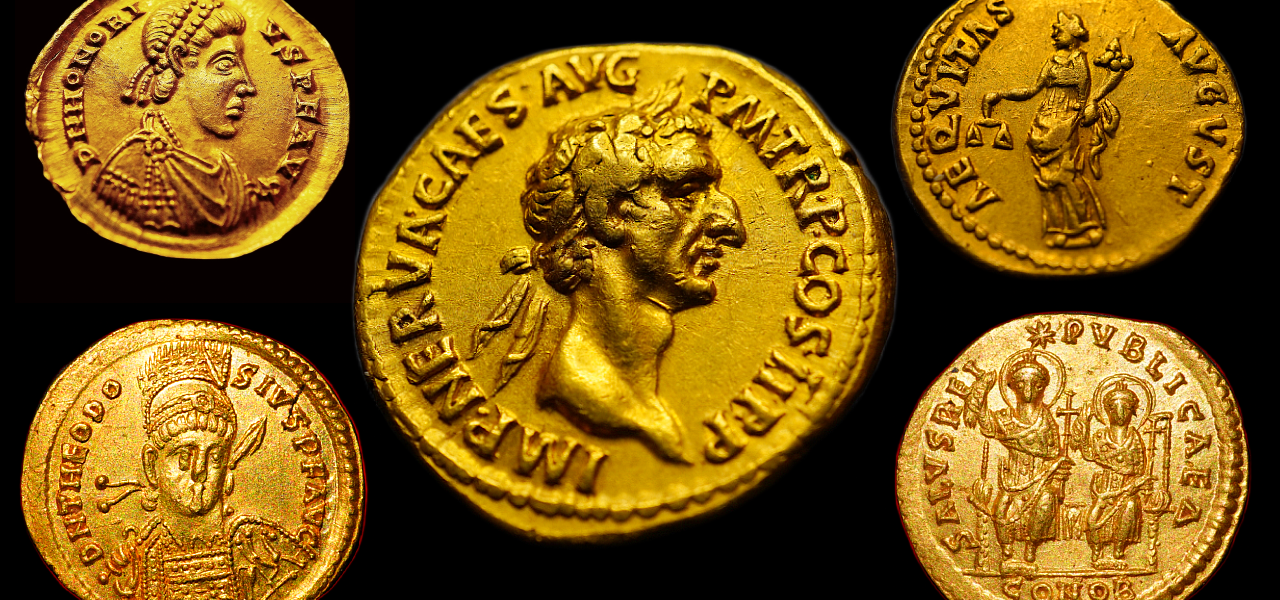
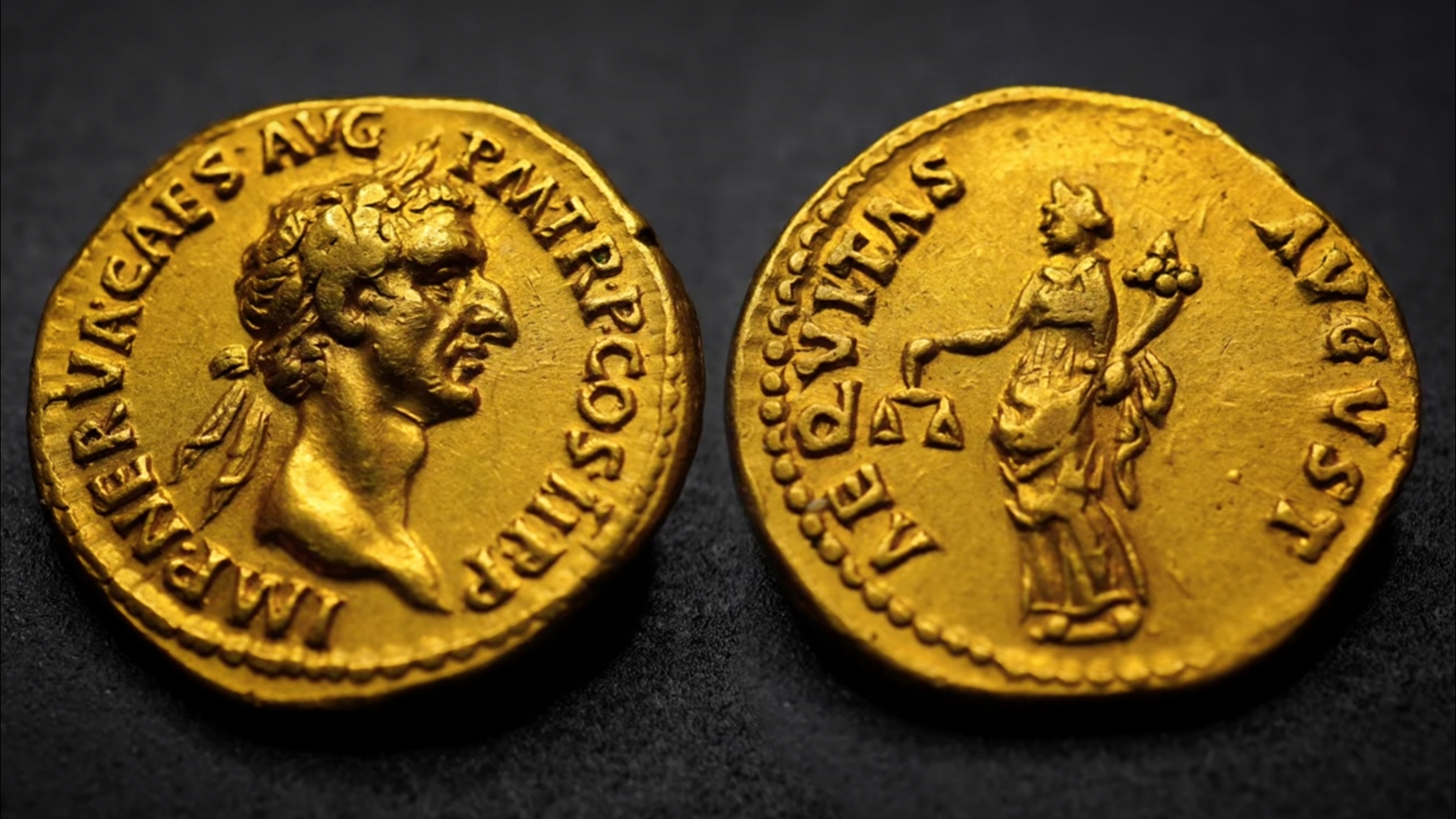
The most famous Roman gold coin is undoubtedly the aureus.
Although it first appeared during the late Roman Republic, it became truly important under Augustus.
For centuries, the aureus represented stability within the Roman monetary system.
Its main characteristics included:
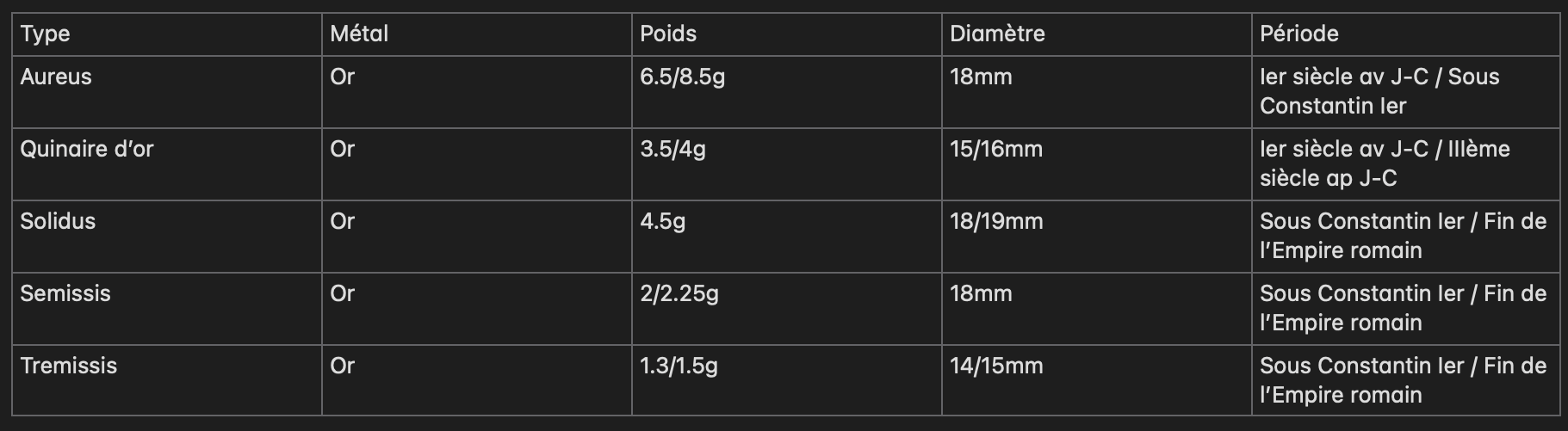
- a weight of approximately 7.5 grams;
- extremely high purity;
- outstanding craftsmanship;
- remarkable long-term stability.
Owning an aureus in ancient Rome was a clear sign of wealth and social status.
A Coin Designed to Impress
Roman gold coins were not intended for ordinary citizens.
Most farmers and common workers would never see an aureus during their lifetime.
Instead, these coins circulated among wealthy merchants, senior officials and military officers.
As a result, Roman gold coinage often features exceptionally detailed portraits and carefully executed designs.
Their purpose was clear: to demonstrate the emperor’s power and legitimacy.
Strict Quality Control
Because gold was so valuable, production was tightly controlled.
Only selected imperial mints were authorized to strike gold coinage.
Weight standards were also closely monitored.
Even a small difference in weight represented a significant amount of gold.
This strict control explains why Roman gold coins remained remarkably stable for centuries.
The Third-Century Crisis
Like the Empire itself, Roman gold coinage faced challenges during the third century.
Civil wars, invasions and political instability weakened the Roman economy.
Although the aureus continued to circulate, its importance gradually declined.
A major monetary reform would soon follow.
The Solidus: The Coin That Stabilized the Empire
In the early fourth century, Constantine the Great introduced the solidus.
This new gold coin replaced the aureus and became the standard gold currency of the Late Roman Empire.
The solidus offered:
- a weight of approximately 4.5 grams;
- exceptional purity;
- long-term stability;
- widespread confidence.
Its success was so remarkable that it survived the fall of the Western Roman Empire and continued to circulate throughout the Byzantine Empire.
Many historians consider the solidus one of the most stable currencies in human history.
The Semissis and Tremissis
To facilitate smaller transactions, the Romans created fractional gold coins.
The most important were:
- the semissis, worth half a solidus;
- the tremissis, worth one-third of a solidus.
These denominations allowed more flexible transactions without requiring the use of a full solidus.
(Here is a table summarizing the main types of Roman gold coins)
Why Are Roman Gold Coins So Popular Today?
Roman gold coins remain highly desirable among collectors.
They are appreciated because:
- they are often exceptionally well preserved;
- gold resists corrosion extremely well;
- they represent the highest level of Roman coinage;
- they directly reflect the power of the Roman emperors.
If bronze tells the story of everyday life and silver tells the story of the economy, gold tells the story of power.
The Drawbacks of Collecting Roman Gold Coins
The main drawback is their price.
Even relatively common aurei often sell for several thousand euros.
Rare examples or coins in exceptional condition can reach tens or even hundreds of thousands of euros.
Solidi are generally more affordable but still represent a significant investment.
Roman Gold Coins
Roman gold coins occupy a unique place in Roman history.
They were never the most common coins, but they were always the most prestigious.
From the aureus of Augustus to the solidus of Constantine, these coins symbolize wealth, stability and imperial authority.
Today they remain among the most fascinating and sought-after ancient coins in the world.